Unveiling Crocodile Leather Prices: A Difference and Value Analysis of Five Common Crocodile Species
Research Report: Detailed Analysis of Crocodile Species and Leather Price Differences
Crocodile leather is widely used in the fashion industry, and the growth cycle, husbandry requirements, and leather quality of different species directly affect their market value. Below is a detailed analysis of five common crocodile species used for leather: Caiman, Siamese Crocodile, Nile Crocodile, American Alligator, and Estuarine Crocodile (Saltwater Crocodile), along with a discussion of their differences and reasons for price variations.
1. Spectacled Caiman
-
Biological Characteristics and Growth Cycle:
Spectacled Caimans belong to the Alligatoridae family, reaching sexual maturity in 4-7 years. Females are about 1.2 meters, males about 1.4 meters, with a maximum size of 2.5 meters. Incubation lasts about 90 days. Juveniles grow 30-60 cm per year, while adult growth is slow. According to Britannica's description of Caiman growth and reproduction, their global population numbers in the millions, showing strong adaptability.
-
Husbandry Requirements:
Juvenile Caimans need to be fed 1-2 times daily, with food amounting to about 10% of their body weight, primarily small fish. Adults are fed 2-3 times per week, with food reduced to 5%-10%. Husbandry is relatively simple, suitable for small farms, with lower costs.
-
Average Length and Rearing Cycle:
Average length 1.4-2.5 meters, rearing cycle approximately 4-7 years, commercial size typically reached at sexual maturity.
-
Leather Quality and Price:
Caiman leather is brittle due to high ossification, resulting in lower quality and the lowest market value, often used for mid-to-low-end products. Its leather is stiffer and relatively cheaper.
- Price Level: Low.
2. Siamese Crocodile
-
Biological Characteristics and Growth Cycle:
The Siamese Crocodile is a medium-sized freshwater crocodile, reaching a maximum of about 3 meters. Growth data is scarce. According to Wikipedia's description of the Siamese Crocodile, its sexual maturity period is not clearly defined, but wild breeding rates are low. In captivity, it can lay 15-50 eggs.
-
Husbandry Requirements:
Rearing is mainly done on farms in Southeast Asia. Food includes fish, snakes, and small mammals. Due to its endangered status (IUCN Critically Endangered), special permits are required for rearing. Costs are higher, and technical difficulty is moderate.
-
Average Length and Rearing Cycle:
Average length about 3 meters, rearing cycle not specified. Commercial size may take over 10 years, limited by its rarity.
-
Leather Quality and Price:
Leather quality is medium to low, but purity is affected by hybridization issues. Market value is medium to low, and prices are influenced by protection policies. According to Fauna & Flora's description of Siamese Crocodile conservation, its wild population is less than 5000, and prices are lower than Nile Crocodiles.
- Price Level: Medium-Low.
3. Nile Crocodile
-
Biological Characteristics and Growth Cycle:
The Nile Crocodile is the largest crocodile in Africa. Males average 3.5-5 meters, with a maximum of 6.1 meters; females are smaller. Early growth is rapid, reaching sexual maturity within 10-15 years. According to Britannica's description of the Nile Crocodile, its lifespan can be 50-80 years.
-
Husbandry Requirements:
Rearing requires large spaces. Food includes fish, large mammals, and birds. Adults are fed 2-3 times per week. Costs are high, and technical difficulty increases due to their aggression.
-
Average Length and Rearing Cycle:
Average length 3.5-5 meters, rearing cycle approximately 10-15 years. Commercial size requires a longer period.
-
Leather Quality and Price:
Leather quality is high, suitable for high-end products, but due to higher ossification, its value is lower than Saltwater and American Alligators. Its price is in the mid-range, commonly used for handbags and wallets.
- Price Level: Medium-High.
4. American Alligator
-
Biological Characteristics and Growth Cycle:
American Alligators grow rapidly in the first 5 years, about 30 cm annually, reaching 2.4 meters after 10 years. Females are about 2.7 meters, males can reach 4.3 meters. According to National Zoo's description of the American Alligator, sexual maturity is reached in 6-12 years, with a lifespan of 30-50 years.
-
Husbandry Requirements:
Rearing is mainly in North America. Food includes fish, amphibians, and small mammals. Juveniles are fed 1-2 times daily, adults 2-3 times weekly. Costs are moderate, and technical difficulty is lower due to their docility.
-
Average Length and Rearing Cycle:
Average length 2.7-4.3 meters, rearing cycle approximately 8-12 years. Commercial size is reached at sexual maturity.
-
Leather Quality and Price:
Leather quality is high, with poreless abdominal scales, suitable for high-end products. Its price is second only to Saltwater Crocodiles. American Alligator leather is smooth, commonly used for watch straps, bags, belts, etc., with high market value.
- Price Level: High.
5. Estuarine/Saltwater Crocodile
-
Biological Characteristics and Growth Cycle:
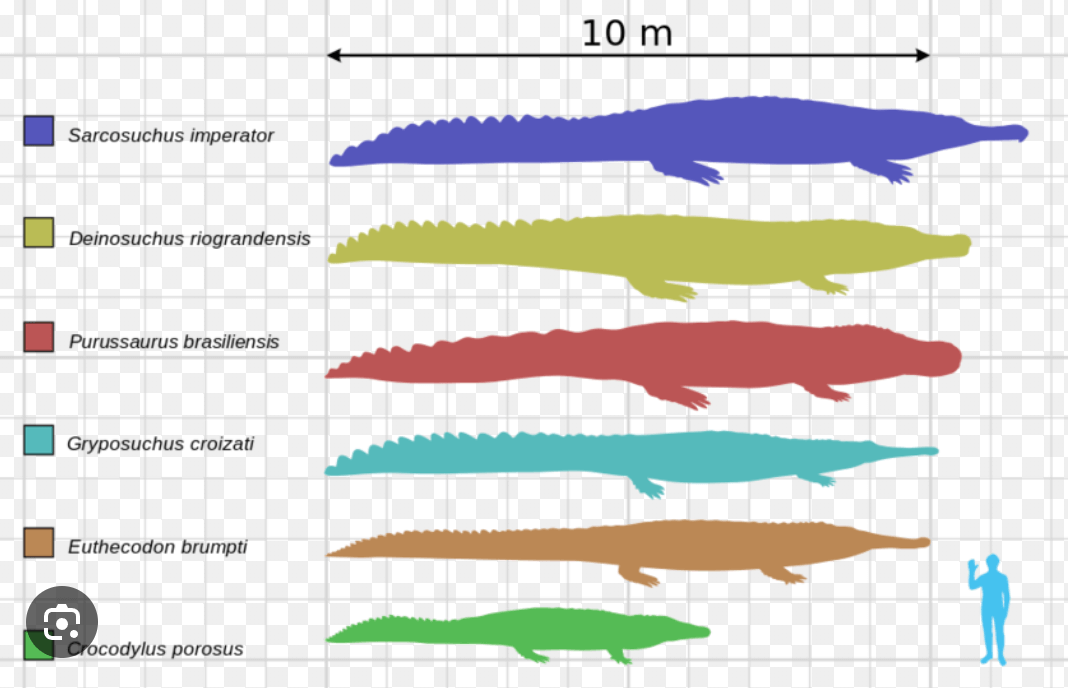
The Estuarine Crocodile is the largest living crocodile, averaging 5.2 meters, with a maximum of 7 meters. Growth is slow, and lifespan can reach 70 years. According to National Geographic's description of the Saltwater Crocodile, sexual maturity is reached in about 10-15 years, with females at 2.2-2.5 meters and males at 3 meters.
-
Husbandry Requirements:
Rearing requires large facilities. Food includes fish, large mammals, and birds. Adults are fed 2-3 times weekly. Costs are high, and technical difficulty is the highest due to their aggression and large size.
-
Average Length and Rearing Cycle:
Average length 5.2 meters, rearing cycle approximately 10-15 years. Commercial size requires a longer period.
-
Leather Quality and Price:
Leather quality is the best, with no ossification and fine abdominal scales. Prices are the highest, commonly used for top luxury goods. According to ASimpleModel's description of crocodile leather cost, its delicate pattern makes Australian-produced saltwater crocodile skin account for 60% of the market, with value far exceeding other species.
- Price Level: Highest.
Price Difference Analysis
Price differences are mainly determined by leather size, quality, and rarity. Saltwater crocodile leather commands the highest prices due to its large size and delicate pattern; American Alligator leather is second, popular for its smooth abdominal scales; Nile and Siamese crocodile leather have medium value due to higher ossification; Caiman leather is the cheapest due to its lowest quality. Saltwater crocodile skin is classified as first-grade, American Alligator as second-grade, and Nile Crocodile as third-grade. The quality grade and processing techniques (such as light or heavy coating) also affect prices.
Table: Crocodile Species Comparison
| Species | Sexual Maturity (Years) | Average Length (Meters) | Rearing Difficulty | Leather Quality | Price Level |
|---|---|---|---|---|---|
| Caiman | 4-7 | 1.4-2.5 | Low | Low | Low |
| Siamese Crocodile | Not Specified | Approx. 3 | Medium | Medium | Medium-Low |
| Nile Crocodile | 8-12 | 3.5-5 | High | Medium-High | Medium-High |
| American Alligator | 6-12 | 2.7-4.3 | Medium | High | High |
| Estuarine Crocodile | 10-15 | 5.2-7 | Very High | Highest | Highest |
Conclusion
The growth cycle, husbandry requirements, and leather quality of different crocodile species directly affect their market value. Customers often ask why there are so many types of crocodile leather; the differences lie in their biological characteristics and rearing conditions. Price differences stem from leather size, quality, and rarity, with saltwater crocodile leather being the most expensive due to its superior characteristics, and Caiman leather being the cheapest.

Individual differences, environmental conditions, etc., may vary.
Data sourced from Fubao Crocodile Workshop.
您好,我想了解一下鱷魚皮的價格。還有鱷魚頭的瀑布。明亮的。謝謝你回答我。 Bob price Coco